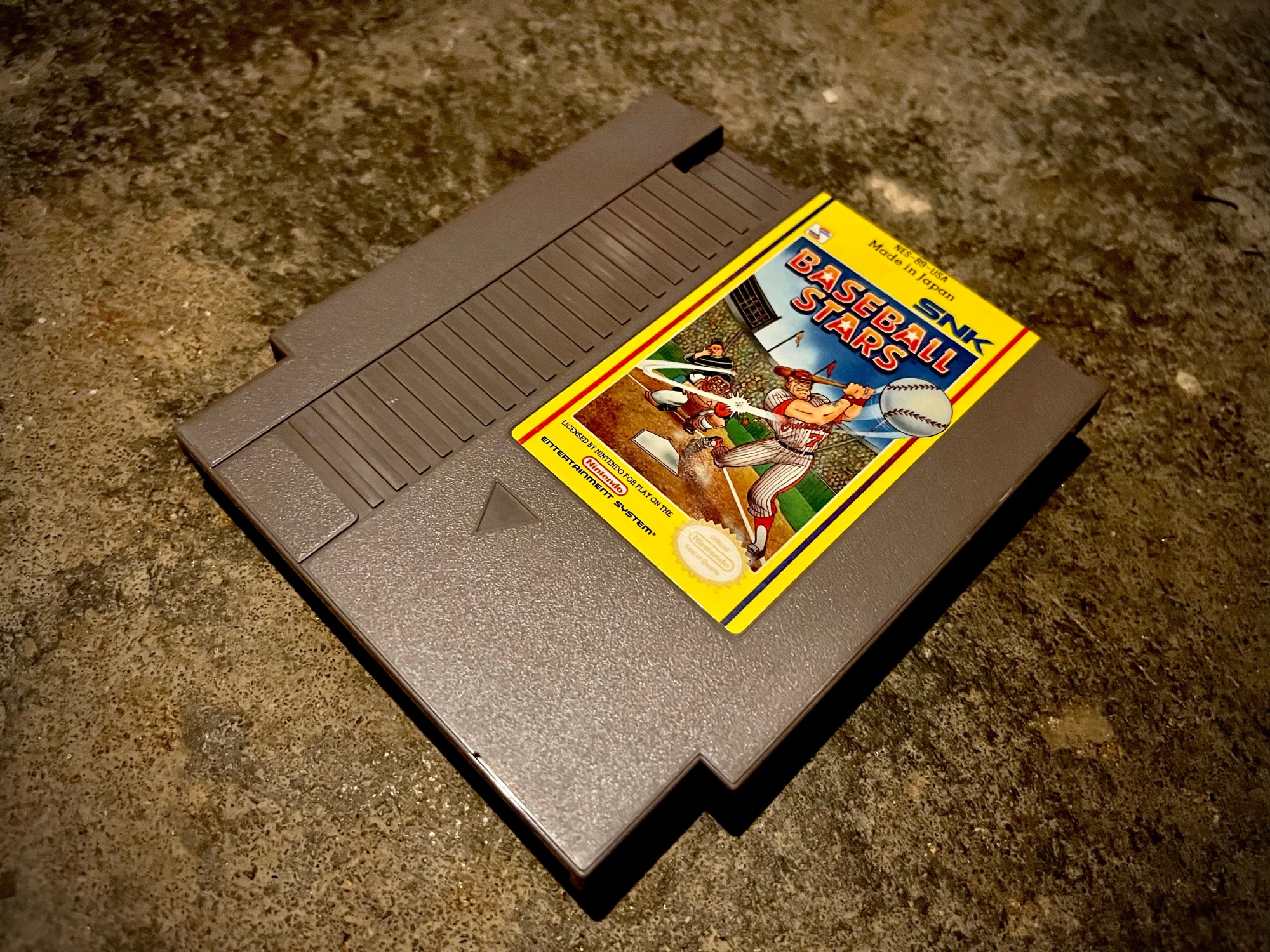

At nine years of age, baseball was my life. I religiously followed the WGN Boys of Zimmer. The cult of Ryne Sandberg. I watched as many games as I could while the 1989 Cubs season-wide party clenched the pennant. I played endless dream games of baseball in combined front yards with my neighborhood friends. Batting tennis balls, we turned triple plays at Candlestick and Three Rivers Stadium. Besides Topps, Donruss, and Andre Dawson, my other obsession was my Nintendo Entertainment System.
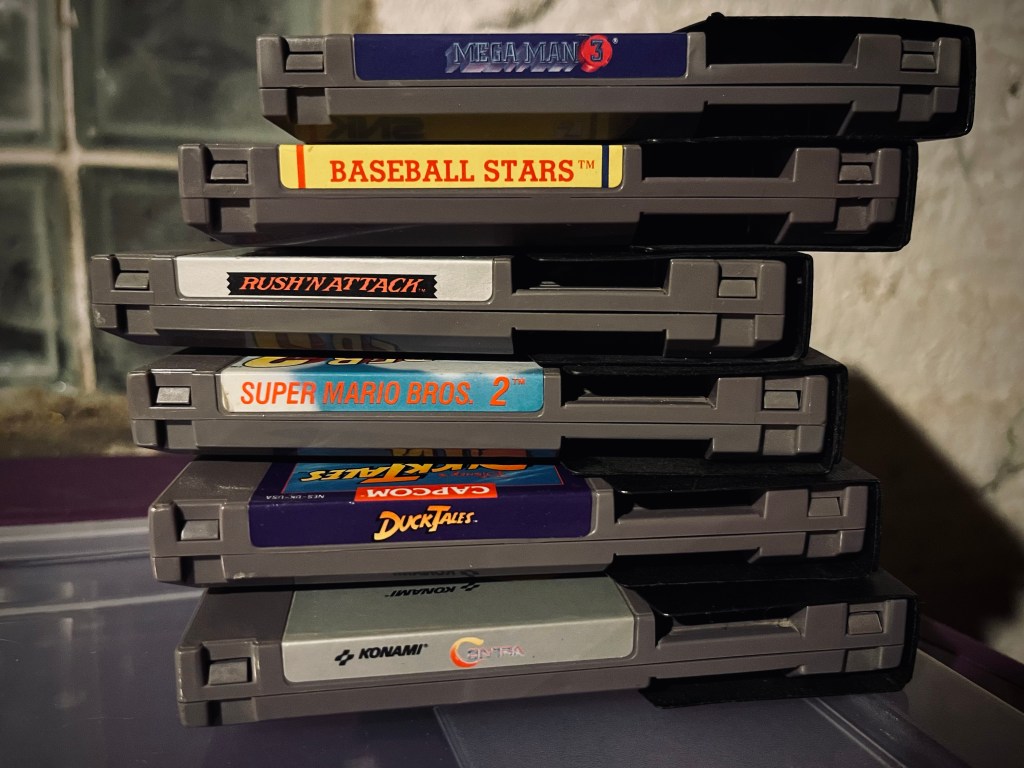
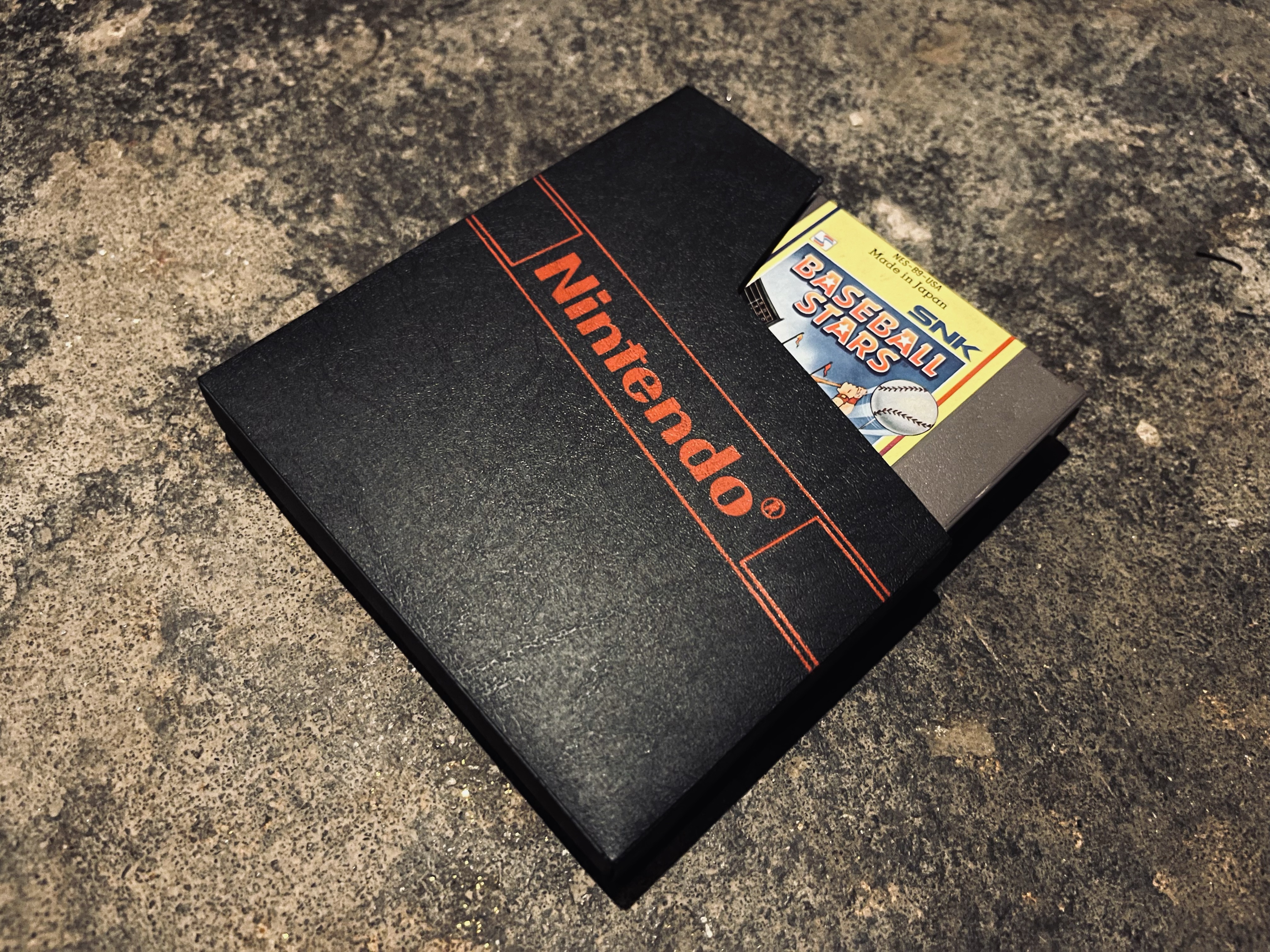
The game Baseball Stars stole my heart and zapped all my residual attention. Girls? Music? That stuff could wait. When they switched off the brand-new lights at Wrigley, the soft glow of our transistor television drove my focus. Cranking homers out of SNK park to shatter the American Dreams.
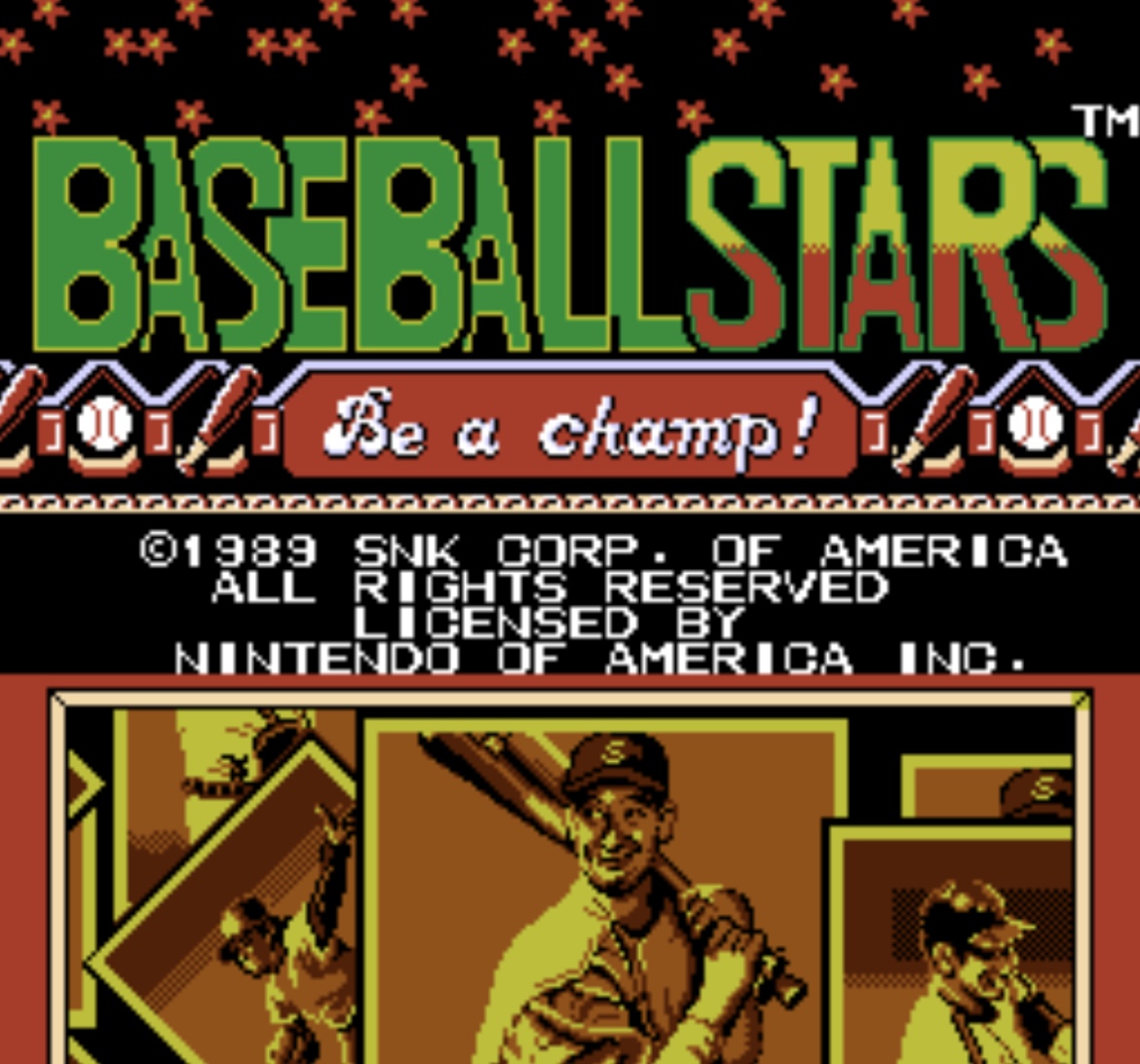
Summer of ’89 consisted of me walking to 7-11 on Sauk Trail in Richton Park, to score a pack of Upper Deck and a suicide Slurpee. My transition from Garbage Pail Kids to baseball cards took place sometime around Jerome Walton’s rookie year. I’d return home to power on my grey cube of glory, beacon of red light glowing strong. The tiny window of warmth letting me know gameplay was soon.

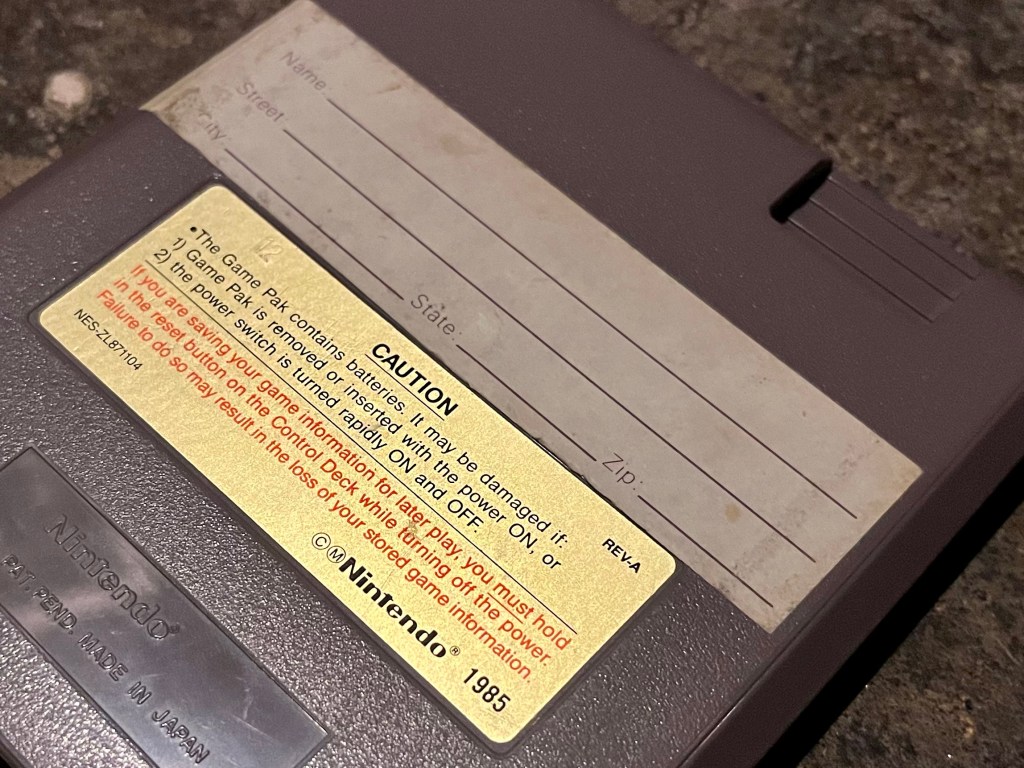
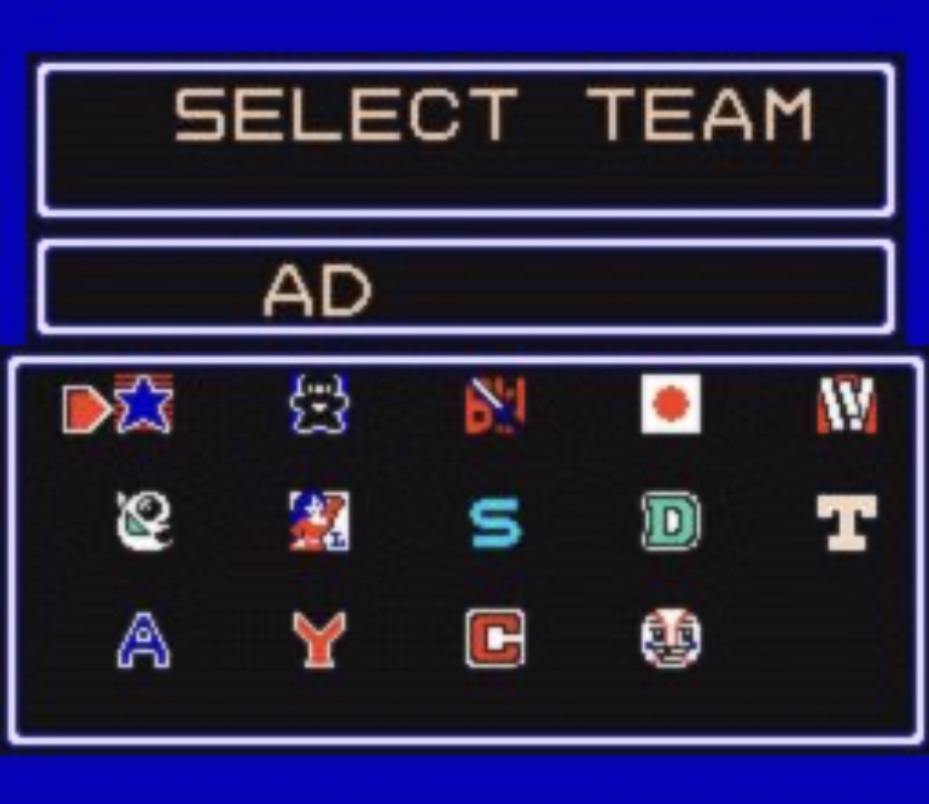
Aside from the earworm digital pipe organ music, I was hooked on the nuance of Baseball Stars. It was the first game developed with battery backup on any console. All this meant was that the computer could save information after the system was powered off. Powered off, that is, in a particularly secret way. I will not disclose here the cryptic, ritualistic process.

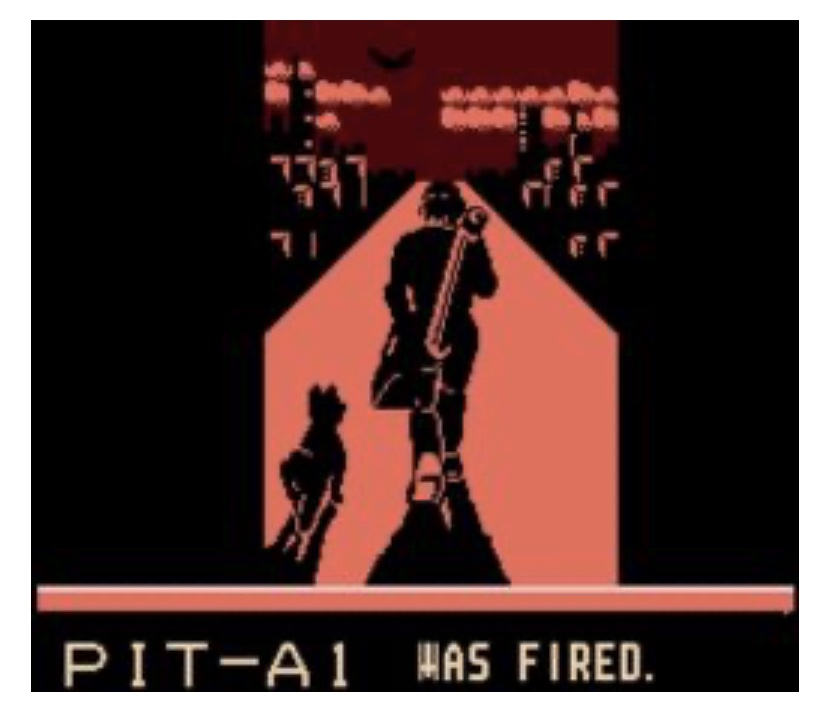
You could create a team, hire players on a free agent market, name each player, fire players (which always felt devilishly fun) and create your own roster based on how you wanted each player to perform. If you wanted a full team of Harold Baines level hitters, you could do so over the course of a few weeks. Silly character names and cartoonish superpowers in a creative device was just as fun as actually playing the game. (1)
You could set up leagues and if you won games, you would earn digital money. You could use the money to “power up” your players in any way you desired. Upgrades and modification to Canseco era steroid level power hitting, electric base stealing speed, and abilities for absolutely demonic curve balls, virtually impossible to hit. You could even power up players in prestige, meaning that they’d draw more of a crowd, and you’d get more income the more you played.


In the game I wasn’t just Donny Baseball. I was George Steinbrenner. I was the Dungeon Master. Each team’s win/loss standing in the scheme of the league was always noted. I could see top ten leaders in batting average, home runs and ERA. I could make decisions based on the data.
To generate the most currency in the least amount of time, my friend Adam and I discovered that out of all the ballclubs, this pre-programmed team called the Lovely Ladies would attract the most fans to their games. We’d stay up all night with our created “league” of just our team (inevitably named after some sort of human waste or derogatory bodily function) and the poor Lovely Ladies who somehow got roped into all of this based on nothing but their prestige. (2)

We honed a process. We’d start a player-to-player game by getting the Lovely Ladies out in one side of an inning. Nine fastballs right down the middle of the plate and zero swings. Then we’d spend the other side of the inning using a Lovely Lady pitcher to throw at every one of our players, hitting each one of them with the ball so they could take their base, forcing the next runner home, one after another.
Efficiencies in helping us to use the most minimal amount of energy per game, scoring enough runs to where the ten-run slaughter rule came in to play. The game would end, and we’d get a sizeable chunk of change to further augment our players’ abilities.


After a full night of zombie trance repetition of hilarious beanballs and power-ups and Doritos and Mountain Dew, we’d meticulously shut off the NES and our team would be saved until the following morning. We’d then wake up and continue to wallop homeruns and steal bases in lightning speed to concur A.I. teams like the Ghastly Monsters, and the Ninja Blacksox.
I wouldn’t have been able to articulate it at the time, but rules of economics were the true reason I enjoyed Baseball Stars. The game itself handled a hundred times more smoothly than RBI Baseball or Bases Loaded or any of those other baseball games designed for original Nintendo. The play itself was extremely entertaining and it got really intense. There was a lot of misplaced, immature rage and emotion during those games and a lot of tact and tempo were honed. Controllers were thrown; patience was learned. There was true technic to bunting and base stealing with agile players equipped with the swiftness of Ricky Henderson.
Hand-eye coordination was one thing, but learning how to leverage financial gain, albeit in a fictional 8-bit world along with slight arbitrage opportunities would stick with me. Time plus motive plus rationalization plus a little bit of boredom. Mechanisms becoming apparent to my nine-year-old self, using the game in ways it wasn’t intended.
I remember an example many years later out of left field where I took advantage of discrepancies in information: I discovered an ability to generate nominal dollars by writing fake software reviews. These were reviews I’d construct for platforms I’ve never even heard of, let alone used, let alone used enough to generate opinions about.
What intrigued me the most about Baseball Stars was that it was a roll playing game. Controlling the narrative from behind the scenes.
See what I would do was Google other reviews on the software and I’d reword them as intensely and as passionately as a sonnet penned by the most romantic sports columnist, both in adoration and loathing. Even the most careful sleuth would not be able to sense any bit of plagiarism – because it wasn’t there. Every review was vetted and approved. I’d get a $20 Amazon gift card for each review, with a $100 monthly maximum. Plus, I was doing it while being paid at another job for something else.
In reality, I was writing helpful recommendations. It’s that’s simple. “Can” you write a review of something you’ve never heard of? Well, my friend, that is a moral philosophy we can debate at another time. Regardless they were effective and beneficial enough to enable me to buy a lot of vinyl records on Amazon.
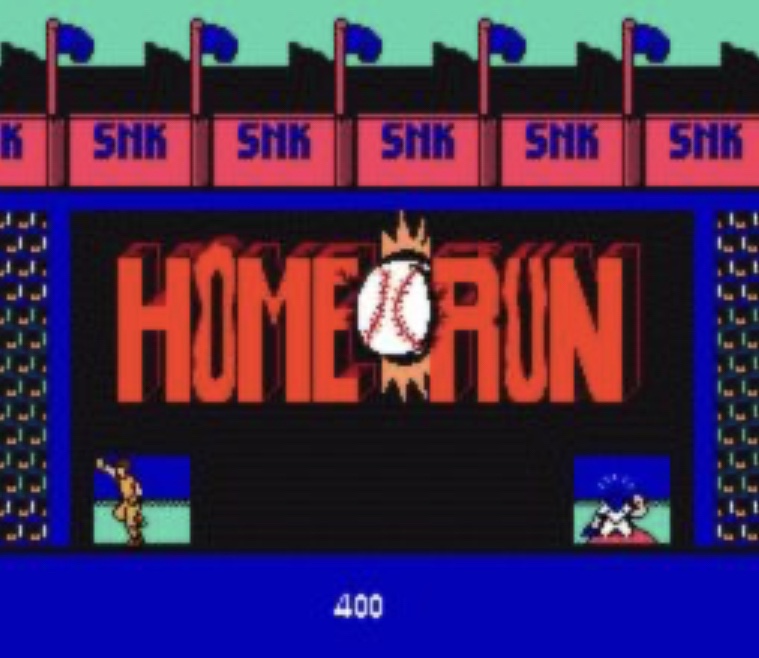
Look, I can’t help it if the Lovely Ladies couldn’t pitch well, and they threw at every batter. I can’t help that they ended every match in the losing end of a slaughter rule but still drew record attendance. Gaps in information present themselves in angled time windows. People enjoy the Lucky Charms marshmallows the most. The motivated take advantage when knuckleballs are lobbed, and ideally no one is stepped on.
One repeating, particularly hellish nightmare came in the form of powering on the NES only to find that all the hard-earned data had been erased. For no known earthly reason our meticulously crafted baseball teams would be wiped clean from existence. A scarring event akin to an investor leaving his blue chips to put his life savings in L.A. Gear or non-fungible donald trump digital skeeball tokens.
The understanding was implemented in a nine-year-old’s life lesson and attributed to the ever-evolving idea of efficiency: not everything you’ve built is promised to be there tomorrow, and sometimes it isn’t worth it to rebuild.
The final time the nightmare occurred, I ejected my Baseball Stars cartridge faster than an umpire ejecting Tommy Lasorda and I popped in my next NES love interest: Mega Man.
…
- A recurring player of note named Nipps, we powered up in every skill imaginable, including luck. Nipps will go down in the Baseball Stars history books, a sure-fire nominee for Cooperstown. A magnificent antihero of bliss and splendor.
- Even in video game form, women players were forced to wear shorts.


So many memories & emotions flooding in. Astonishing journalistic integrity.
LikeLike
Thanks, Nipps. Sorry about the steroids thing and the corked bat thing.
LikeLike
Thanks Nipps. Sorry about your steroid scandal. It went down in an awkward, oddly sexual way, but you’re tell-all book will be a best seller, no doubt.
LikeLike